AUTHORIZATION
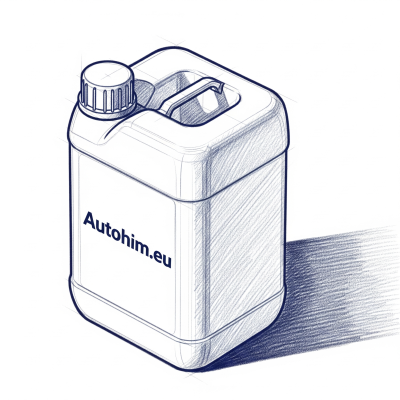
Fritherm - 25˚С (40%)
Add to cart
Measure liter
Availability is available
Availability is available
The FRITHERM heat transfer fluid with a low freezing point is designed for use in autonomous heating and cooling systems, and it can also be used as a working fluid in heat exchange equipment that operates at low temperatures.
Composition
The production of FRITHERM heat transfer fluid uses high-quality ethylene glycol as the base component. The heat transfer fluid contains balanced anti-corrosion and protection inhibitors for various metals. It includes inhibitors that reduce fluid foaming and protect sealing materials. Demineralized water is used in the production of the heat transfer fluid. We produce the FRITHERM heat transfer fluid ready for use at temperatures down to -25°C, as well as a FRITHERM concentrate. The concentrate can be used by diluting it with demineralized or distilled water, based on the table shown below.
| Freezing Temperature | “FRITHERM -K” Content % | Water Content % |
| - 40° | 55 | 45 |
| - 30° | 47 | 53 |
| - 20° | 35 | 65 |
We do not recommend mixing the heat transfer fluid concentrate in a ratio that would yield a ready-to-use liquid with a temperature higher than -20°C, as this could reduce the protective properties of the inhibitor additives and may lead to corrosion, scale formation, and deposits. For heating systems with electric boilers, we recommend using the FRITHERM heat transfer fluid with a freezing temperature of -20°C to -30°C. For natural circulation systems, we recommend mixing the FRITHERM concentrate before pouring it into the system.
In forced circulation systems, FRITHERM concentrate can be mixed directly in the system. Initially, a portion of the required water amount should be poured into the system, followed by the FRITHERM concentrate and then the remaining water amount. For heating systems with electric boilers, we recommend checking the parameters of the circulation pump and, if necessary, replacing it with a higher capacity pump. The ethylene glycol-based heat transfer fluid has a greater thermal expansion coefficient than water, so to prevent air ingress in a closed system, a pressure vessel should be installed, according to the table below.
| System Volume (liters) | Volume “FRITHERM –25” (liters) |
| Up to 100 | 20 |
| From 100 to 300 | 45 |
| From 300 to 500 | 70 |
| From 500 to 800 | 90 |
| From 800 to 1100 | 140 |
| From 1100 to 1700 | 230 |
| From 1700 to 2300 | 280 |
It is recommended to seal the joints in the system with a sealant that is resistant to ethylene glycol. Following operational guidelines, the technical properties of the heat transfer fluid are maintained for 5 years of continuous operation or 10 heating seasons.
Precautions.
The FRITHERM heat transfer fluid is intended for technical purposes only, so it must not come into contact with food products and drinking water. If the liquid comes into contact with skin or clothing, it must be washed off immediately with water.
Storage.
The heat transfer fluid must be stored in a place inaccessible to children, in a hermetically sealed container, away from food products.
Packaging
Cans – 10L; 25L; drums - 210L and container - 1000L
FRITHERM-20, heat transfer fluid
 |
 |
Attention! Acute Tox. 4 (oral) – Acute toxicity (oral), category 4 hazard. STOT RE 2 - Toxic effect on target organ – repeated exposure, category 2 hazard. H302 Harmful if swallowed. H373 May cause liver damage after prolonged or repeated exposure if swallowed.